


The world’s major waterfalls represent some of the most impactful and beautiful places on our planet. The imposing sound of falling water and their exuberant natural beauty attract millions of visitors every year. These natural wonders captivate through their immense strength, color, and constant movement, generating an incomparable visual and auditory impact. Below, we explore some of the world’s primary waterfalls, highlighted by their size, natural surroundings, and unique appeal.
What is a waterfall and what is a cataract?
A waterfall is a drop of water from a certain height, whether from a river or another current due to a sharp change in elevation. We speak of a cataract when referring to a waterfall that is particularly large or high-volume.
An interesting aspect to highlight is the difference between a waterfall and a cataract. Although they are used as synonyms in everyday language, they have technical distinctions:
- Waterfall: Refers to any place where water falls from a certain height, regardless of the water volume. It can be a small or large drop, but the emphasis is on the fall itself.
- Cataract: Generally designates water drops with great volume and force, thus being impressive masses of water that generate significant visual and acoustic impact.
Therefore, all cataracts are waterfalls, but not all waterfalls reach sufficient magnitude to be considered cataracts. Furthermore, waterfalls are differentiated not only by height but also by their volume, width, number of drops, and natural environment.
1. Niagara Falls (United States / Canada)
Niagara Falls, located on the border between the United States and Canada, are part of the world’s main waterfalls and are perhaps the most famous. Although they are not the tallest, with a maximum drop of 51 meters (or a 52-meter water jump according to some measurements), their width and the volume of water that falls make them one of the most visited natural attractions. They do not have a massive vertical drop but they possess a great width that is quite impressive.
The falls are divided into three sections:
- Horseshoe Falls (Canadian Falls): On the Canadian side, we find the Horseshoe Falls. The name comes from the path of the water passing over its crest and falling down the sides, creating the famous horseshoe shape. It is considered the most impressive, as almost 90% of the water from the three falls passes through it.
- American Falls: Located on the other side of the border, on the American side.
- Bridal Veil Falls: The smallest of the three waterfalls at Niagara.
From both countries, visitors can enjoy panoramic views and tourist activities. You cannot miss the boat excursion; it is an unforgettable experience. The famous Maid of the Mist boat tour navigates close to the base of the falls. Additionally, its proximity to New York City facilitates visits through specialized tours.
2. Iguazu Falls (Argentina / Brazil)
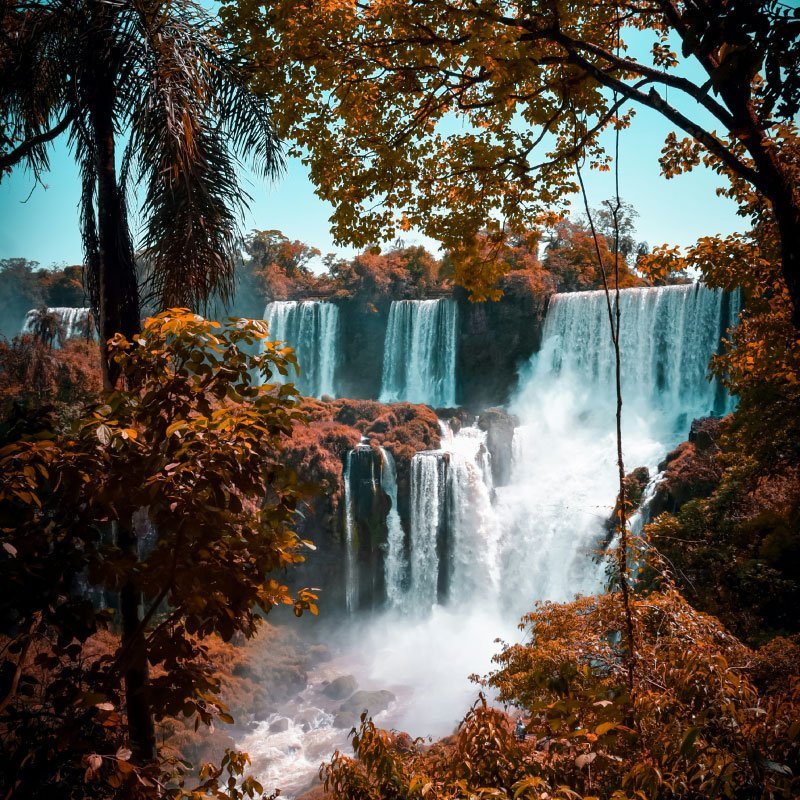
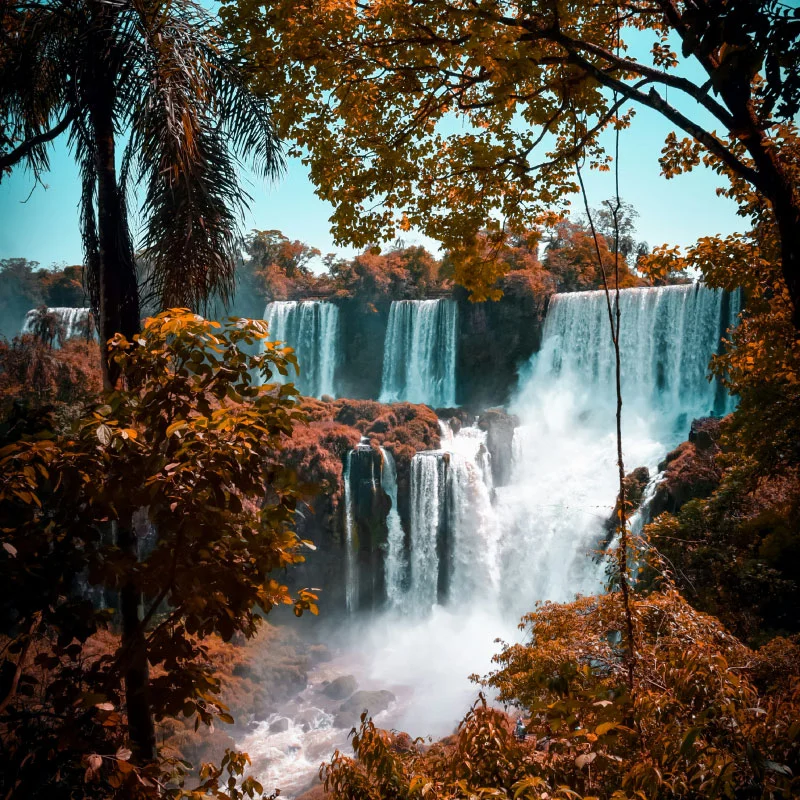
Located on the border between Argentina and Brazil, the Iguazu Falls are one of the world’s major waterfalls, a natural wonder composed of 275 water drops along 2.7 kilometers. The Devil’s Throat (Garganta del Diablo) is the most impressive drop, with an 80-meter fall that creates a cloud of mist visible from miles away.
This waterfall system is located within the Iguazu National Park and is a UNESCO World Heritage site. Its jungle environment and the diversity of trails and viewpoints allow visitors to immerse themselves in an unparalleled natural spectacle. It offers an incredible tropical rainforest, walkway tours, and stands out for its natural and cultural value.
3. Victoria Falls (Zambia / Zimbabwe)
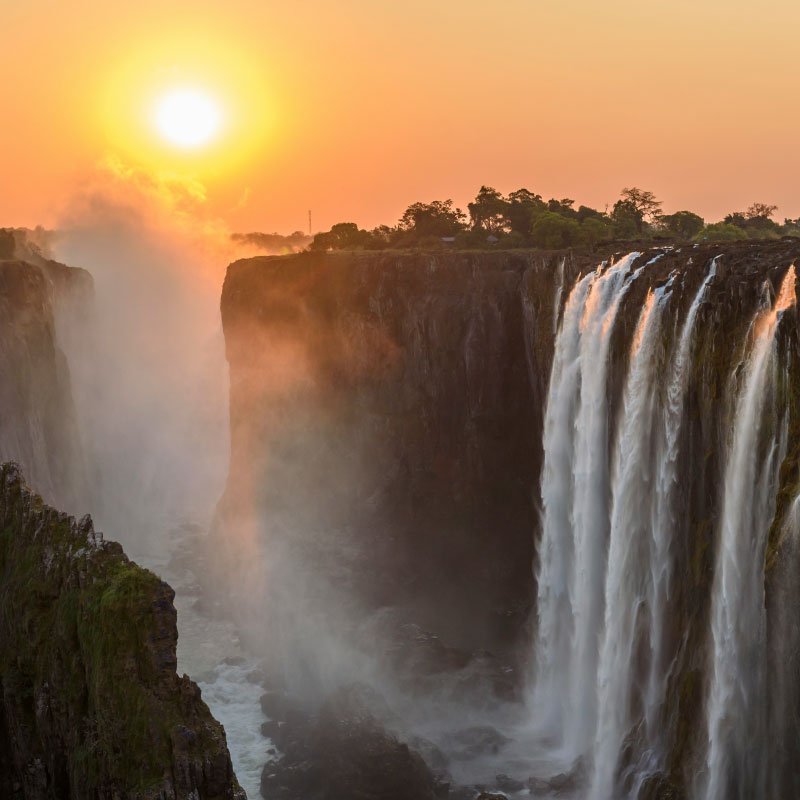
Known locally as “Mosi-oa-Tunya” or “The Smoke That Thunders,” they are located on the Zambezi River, on the border between Zambia and Zimbabwe. Considered among the world’s primary waterfalls, they have a width of 1.7 kilometers and a height of 108 meters, making them the largest waterfalls in the world in terms of their total area of falling water.
The best time to visit is during the rainy season, when the water flow is especially spectacular, generating a deafening noise and a massive mist that can be seen from miles around. Tourist activities include rafting, nearby safaris, and helicopter rides.
4. Angel Falls (Venezuela)
Angel Falls (or Salto Ángel) in Venezuela are the highest in the world. Comprising several levels, the deepest level is 807 meters, with a total drop of 979 meters from the summit of Auyantepui. They are located in the Canaima National Park, a UNESCO World Heritage site.
The waterfall’s name refers to the American aviator Jimmie Angel, who discovered them in 1933 while flying over the Venezuelan jungle and spotted a water gorge so deep that the water, descending with such force, produced a massive drizzle. This remote destination is ideal for adventurers seeking a unique experience in nature, crossing tropical jungles and rivers.
5. Tugela Falls (South Africa)
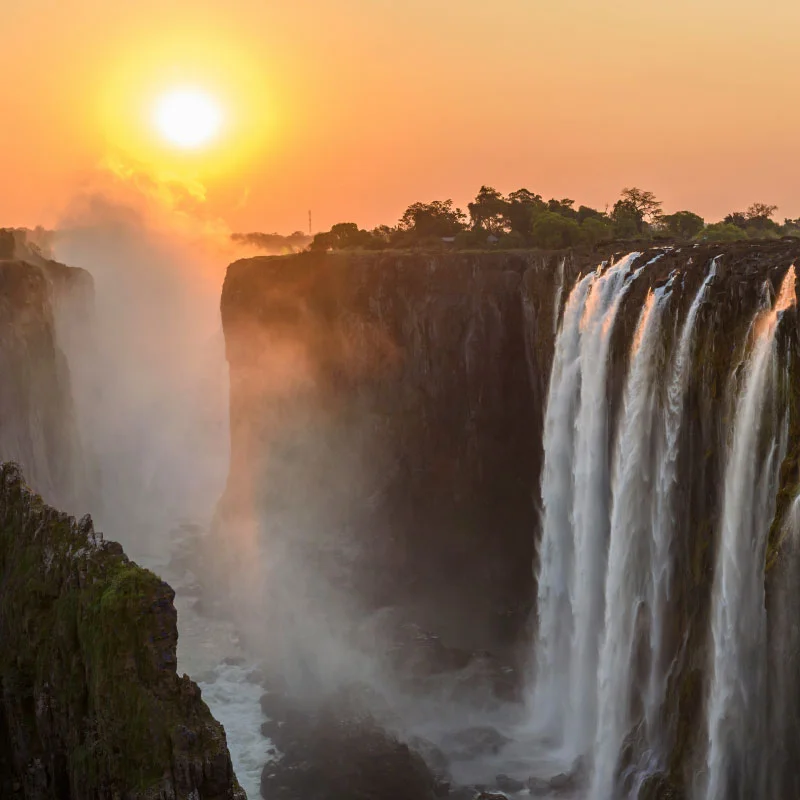
Located in the Royal Natal National Park, in the Drakensberg mountains of South Africa, Tugela Falls are the second highest in the world. They feature a total drop of nearly 950 meters (948m) divided into five consecutive jumps. A major difference is their low flow, which can disappear during the dry season. However, the water is very safe and pure to taste before the fall. In the rainy season, they are visible from the main park road, making them ideal for trekking and ecotourism lovers.
6. Vinnufallet Waterfall (Norway)
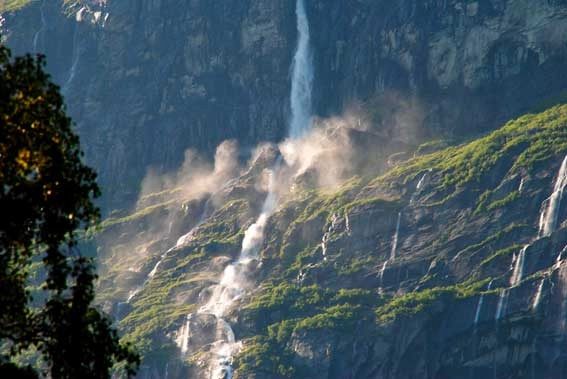
Located near Sunndalsøra, Norway, it is also known as the Vinnuflossen waterfall. This waterfall is the largest in Europe and very impressive. It is formed by the melting of the Vinnu glacier; the water plunges from the top of a rocky mountain through a crack. By hitting the second level with great force, it creates a spectacular veil reaching a width of more than 152 meters.
7. Yosemite Falls (United States)
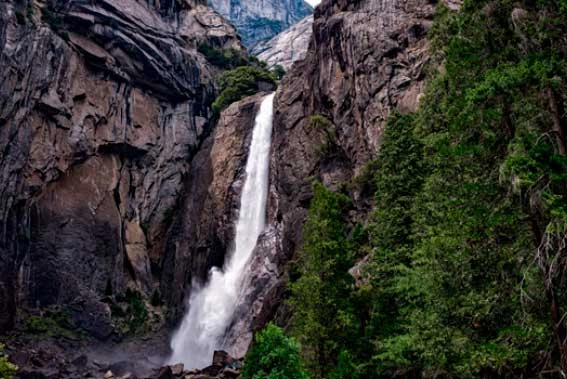
Although not as famous as Niagara, Yosemite Falls is the highest waterfall in North America. It is located in Yosemite National Park, the most popular park in the Western U.S. They are ideal to visit in April and May, as the river brings its greatest water flow due to snowmelt.
8. Other Majestic Waterfalls
- Kaieteur Falls (Guyana): Located on the Potaro River, they are noted for their power and natural beauty. With a drop of 226 meters (five times higher than Niagara Falls), their combination of height and high water volume offers a unique experience in a remote area.
- Detian Falls (China/Vietnam): Located on the border between both countries, they are the largest transboundary waterfalls in Asia. They have a drop of 70 meters and extend over 200 meters, surrounded by exuberant mountainous landscapes.
Summary of Fun Facts and Tourist Options
As we have seen, waterfalls are differentiated by specific records:
- Victoria Falls are the largest in terms of falling water area.
- Angel Falls have the highest free-fall drop in the world.
- Kaieteur Falls combine height and volume in a pristine, unexplored area.
Visiting these places allows you to find natural wonders that captivate all the senses: the roar of the water, the cool breeze, and unforgettable landscapes. They are destinations that invite adventure and a deep connection with nature.
And now that you have information about the most famous waterfalls in the world… If you had to choose two… Which ones would you like to visit?
We hope you enjoyed this article and can visit these jewels of the world, authentic living monuments that inspire respect and admiration. You could start with a Niagara Falls Tour from New York.